What Is a Sediment Trap?
A gas sediment trap is a small but important component of gas piping that helps prevent debris from entering appliance controls. When inspecting homes throughout Las Vegas and Southern Nevada, we occasionally encounter gas-fired appliances with missing or improperly installed sediment traps.
Although this small section of gas piping might not look particularly significant, it serves an important purpose in helping protect gas appliances from debris and contaminants.
What Is a Gas Sediment Trap?
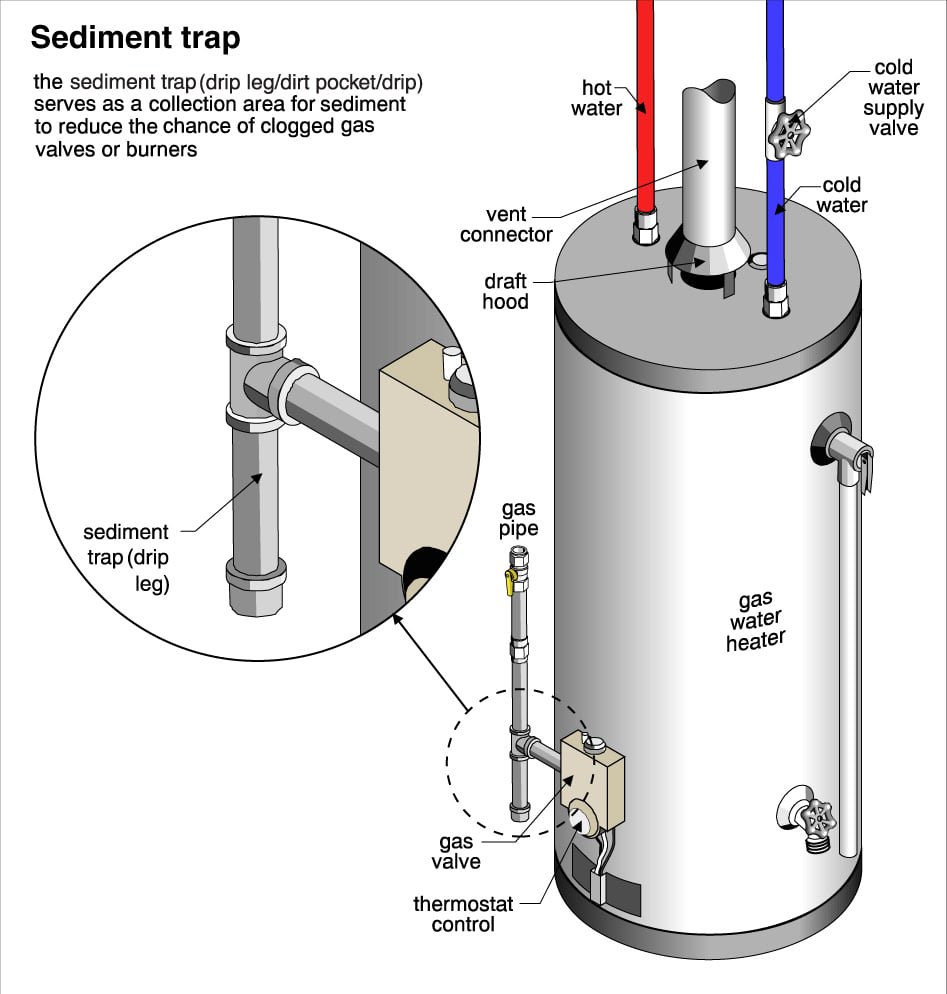
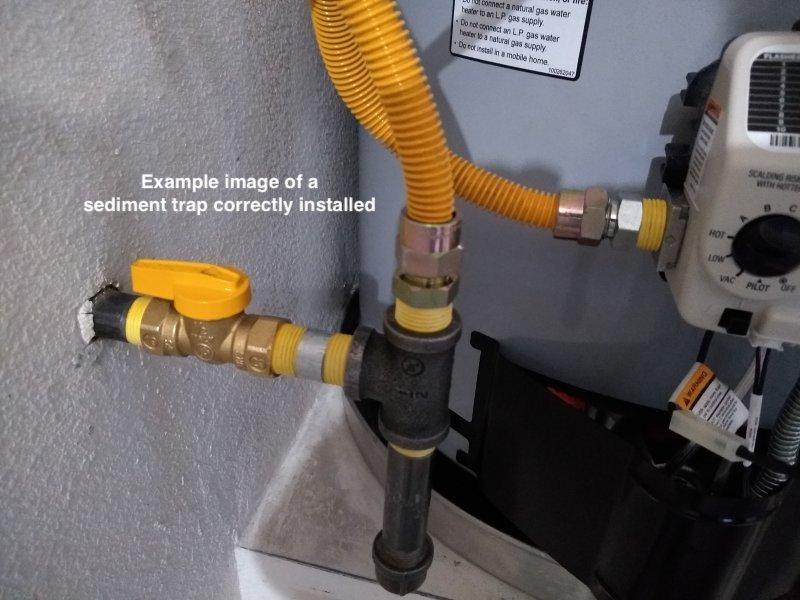
A sediment trap is a component installed in the gas supply piping near certain gas-burning appliances, such as water heaters and furnaces.
It typically consists of a tee fitting with a short vertical section of pipe that is capped at the bottom. As natural gas flows toward the appliance, dirt, rust, and other particles can settle into this capped section rather than continuing into the appliance.
Sediment traps are sometimes called drip legs, although the two terms technically describe components intended to collect different types of contaminants.
Why Are Sediment Traps Important?
Even a small amount of debris in a natural gas supply line can potentially interfere with an appliance’s sensitive components.
Sediment traps help:
- Reduce the amount of debris entering gas appliances.
- Protect gas valves and other internal components from contaminants.
- Reduce the potential for debris-related operating problems.
- Support proper installation practices and applicable safety requirements.
A properly installed sediment trap is a relatively simple feature that can help prevent unnecessary appliance problems.
Are Sediment Traps Required in Las Vegas Homes?
Applicable plumbing, mechanical, and fuel-gas requirements call for sediment traps on certain gas appliances. Gas-fired water heaters and furnaces are common examples.
However, requirements vary depending on the type of appliance, applicable code, manufacturer instructions, and installation circumstances. Some appliances, including certain cooking ranges, clothes dryers, and gas fireplaces, may be exempt.
A sediment trap is generally installed downstream of the appliance’s gas shutoff valve and as close to the appliance inlet as practical.
What Happens If a Sediment Trap Is Missing?
A missing sediment trap does not necessarily mean an appliance is malfunctioning. However, where one is required, its absence may leave the appliance more vulnerable to debris entering the gas controls.
If a sediment trap is missing or improperly installed, evaluation and any necessary corrections by a qualified plumbing or HVAC contractor are recommended.
Gas piping should never be modified by an unqualified individual.
Sediment Traps and Your Home Inspection
At Fruitful Home Inspections, we visually evaluate accessible gas appliance connections as part of our residential home inspection process.
When we observe a missing or improperly installed sediment trap, we document the condition in the inspection report and provide appropriate recommendations.
Small installation details like these are among the many components we examine to help homebuyers better understand the condition of a property.
Buying a home in Las Vegas, Henderson, North Las Vegas, or the surrounding communities?
Fruitful Home Inspections provides professional residential inspections with detailed photographs, advanced inspection technology, and same-day digital reports.
Schedule your home inspection or call 702-726-2026.