How to Read a Home Inspection Report: What Las Vegas Buyers Should Know
Receiving your home inspection report is an important step in the homebuying process. Whether you’re purchasing your first home or your fifth, understanding what the inspector found can help you make informed decisions about the property.
However, inspection reports can contain dozens of photographs, observations, recommendations, and technical terms that may be unfamiliar to buyers.
Learning how to read a home inspection report can help you distinguish significant concerns from ordinary maintenance items and better understand the condition of the home you’re purchasing.
At Fruitful Home Inspections, our goal is to provide clear, organized reports that explain observed conditions in language buyers can understand.
What Is Included in a Home Inspection Report?
A professional home inspection report documents the visible condition of accessible systems and components evaluated during the inspection.
Depending on the property, these systems commonly include:
- Roof coverings and visible roofing components
- Accessible structural components and foundations
- Heating and air conditioning systems
- Electrical panels, receptacles, and visible wiring
- Plumbing fixtures, supply piping, and drainage
- Water heating equipment
- Attic insulation and ventilation
- Doors, windows, and interior components
- Exterior walls, grading, and drainage conditions
- Installed appliances within the inspection scope
The report may contain photographs, descriptions of observed deficiencies, recommended actions, and information about systems that could not be fully evaluated.
Each inspection company may organize this information differently, but the goal should be the same: to help the client understand the property’s observed condition.
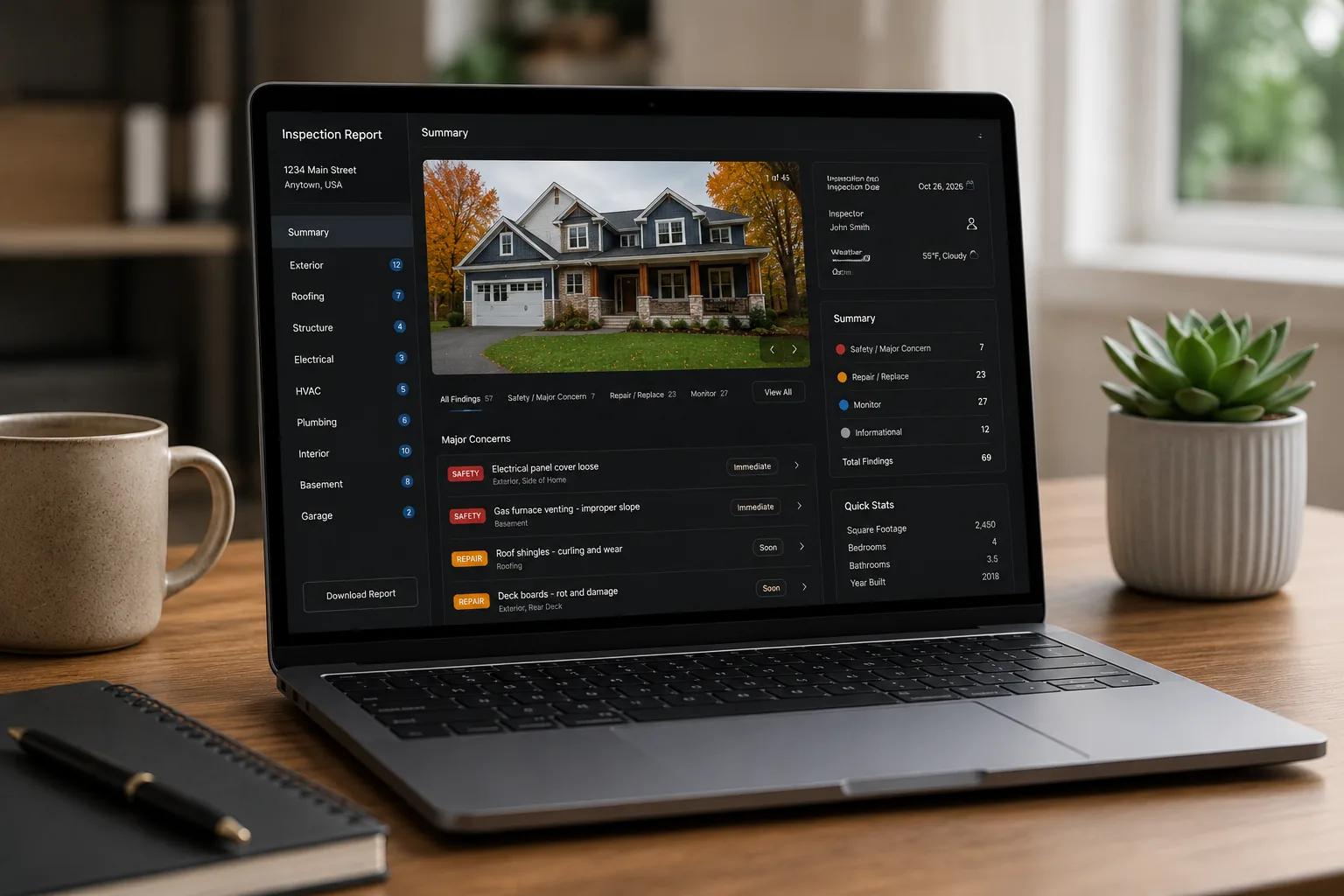
Start With the Inspection Summary
Many modern home inspection reports provide a summary that highlights findings requiring particular attention.
This is often a useful place to begin because it helps buyers identify issues that may need repair, further evaluation, or additional discussion.
However, the summary should never replace reading the entire inspection report.
Some observations, limitations, maintenance recommendations, and informational comments may appear elsewhere in the report.
Reviewing the complete document helps ensure you don’t overlook important details simply because they weren’t included in the summary.
Understanding Different Types of Inspection Findings
Not every observation in a home inspection report represents the same level of concern.
Inspection reporting software may organize findings by severity, recommendation type, or other categories. Some systems also use colors or symbols to help distinguish different classifications.
Because these classifications vary between inspectors and reporting systems, always review the report’s legend or explanation of its categories.
1. Safety Concerns
Safety-related observations identify conditions that may present an increased risk of injury, fire, electrical shock, or other hazards.
Examples might include exposed energized electrical components, missing safety devices, or potentially unsafe equipment installations.
These findings deserve appropriate attention and may require prompt evaluation or correction by qualified professionals.
2. Defective or Improperly Functioning Components
Some findings involve systems or components that are damaged, improperly installed, deteriorated, or not functioning as intended.
Examples include leaking plumbing fixtures, malfunctioning electrical receptacles, damaged roofing materials, or improperly operating doors and windows.
The appropriate response depends on the specific condition and its potential consequences.
3. Maintenance Recommendations
Homes require ongoing maintenance, regardless of their age or apparent condition.
An inspection may identify items that would benefit from cleaning, servicing, monitoring, or routine maintenance.
Examples include servicing HVAC equipment, repairing minor sealant deterioration, or improving drainage around exterior components.
These observations can help buyers plan for property ownership and future maintenance expenses.
4. Informational Observations
Some report comments provide information about the age, location, configuration, or operation of a system without necessarily identifying a defect.
For example, an inspector may document the approximate age of a water heater or describe a limitation that affected the inspection.
These comments provide context that can be valuable when reviewing the overall property.
Why Photographs Are Important
Photographs are one of the most useful features of a modern digital home inspection report.
Instead of relying entirely on written descriptions, buyers can see many of the conditions being discussed.
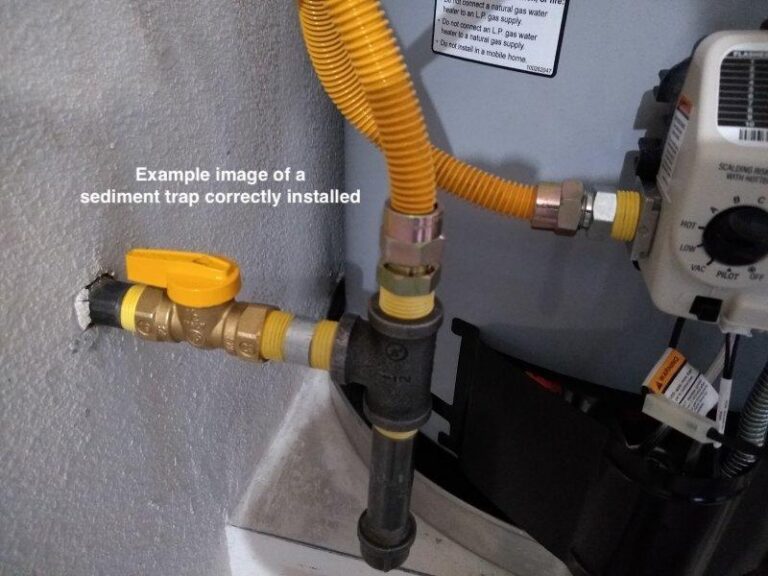
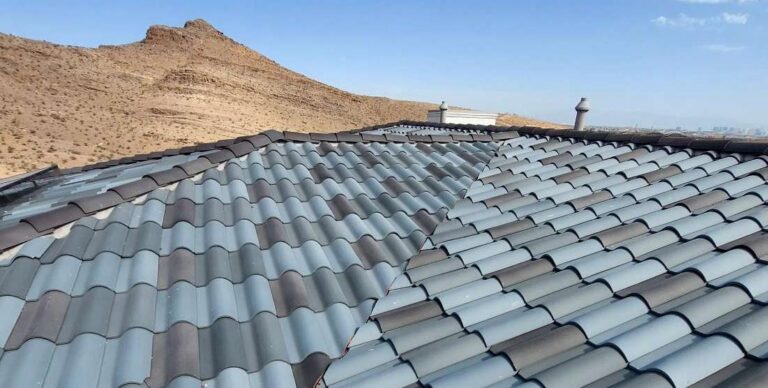
For example, a photograph may show damaged roof tiles, a leaking plumbing connection, an improperly installed electrical component, or a concern involving attic framing.
Photographs can help buyers understand the location and appearance of a deficiency, especially when the affected component is located in an attic, on a roof, or in another area that may not be easily accessible.
However, photographs provide documentation of observed conditions at the time of the inspection. They do not necessarily show the full extent of concealed damage.
What Does “Further Evaluation Recommended” Mean?
Home inspectors are generalists who evaluate many different systems within a limited visual and non-invasive inspection.
Sometimes an observed condition requires a more detailed assessment than a general home inspection can provide.
For example, unusual air conditioning performance may warrant evaluation by a licensed HVAC contractor.
Visible structural concerns may require assessment by an appropriately qualified structural specialist, while suspected roof leakage may require evaluation by a roofing contractor.
When an inspector recommends further evaluation, the recommendation should not automatically be interpreted as confirmation of a major hidden problem.
Instead, it means additional expertise or testing may be necessary to determine the cause, extent, and appropriate corrective action.
Buyers should address significant recommendations within the time allowed by their purchase agreement whenever possible.
Does Every Defect Mean the Home Is a Bad Purchase?
No. Nearly every home has maintenance needs or observable deficiencies, including relatively new properties.
Finding defects does not automatically mean a home is unsafe, poorly constructed, or a bad investment.
The more useful questions involve the nature of each concern, its potential consequences, the cost and complexity of correction, and whether additional evaluation is needed.
For example, a loose cabinet handle is fundamentally different from damaged electrical wiring or evidence of significant moisture intrusion.
A home inspection helps identify and document concerns, but the decision to purchase the property ultimately belongs to the buyer.
What Should Las Vegas Buyers Pay Particular Attention To?
Homes in Southern Nevada can present conditions influenced by the local climate, construction practices, and the age of their systems.
Air Conditioning Performance
Air conditioning is particularly important during Las Vegas summers. Buyers should carefully review findings involving system operation, equipment condition, condensate drainage, and recommendations for HVAC servicing or evaluation.
Roofing Conditions
Concrete and clay tile roofing systems are common throughout the Las Vegas Valley.
Buyers should review observations involving broken or displaced tiles, flashing concerns, visible deterioration, and indications of previous leakage.
Remember that concealed roof underlayment generally cannot be fully evaluated during a visual home inspection.
Plumbing and Water Damage
Water leaks, drainage problems, damaged plumbing fixtures, and moisture-related deterioration can affect homes of many different ages.
Buyers should pay attention to active leaks, water staining, and recommendations for additional investigation.
Electrical Safety
Electrical deficiencies may involve improperly functioning receptacles, missing safety protection, damaged components, or visible concerns inside accessible electrical panels.
Safety-related electrical recommendations should be taken seriously and evaluated by appropriately qualified professionals.
What a Home Inspection Report Cannot Tell You
A standard home inspection is a visual, non-invasive evaluation of accessible systems and components.
It does not guarantee that a home is free of hidden defects, predict every future equipment failure, or establish the precise remaining service life of every component.
Inspectors generally do not dismantle equipment, remove finished surfaces, or perform specialized testing unless those services are specifically included in the inspection agreement.
Environmental testing, concealed moisture investigations, engineering evaluations, and other specialized assessments may require additional professionals or services.
Understanding the inspection’s scope and limitations is just as important as understanding the findings themselves.
What Should You Do After Receiving Your Inspection Report?
After receiving your report, take time to review it thoroughly rather than focusing only on the number of defects identified.
- Read the complete report. Review all findings, supporting photographs, informational comments, and limitations.
- Identify priority concerns. Pay particular attention to safety-related conditions, significant defects, and systems that could not be fully evaluated.
- Ask questions. Contact your inspector if you need clarification about an observation or recommendation.
- Obtain specialist evaluations when recommended. Qualified contractors and other professionals can provide additional assessment and repair estimates.
- Discuss next steps with your real estate agent. Your agent can help explain the options available under your purchase agreement, including applicable inspection deadlines.
- Plan for future maintenance. Keep the report as a reference for systems and components that may require attention after moving in.
Inspection findings can inform purchase decisions, repair discussions, and future maintenance planning, but the report itself does not determine which repairs a seller must perform.
See an Example of a Professional Home Inspection Report
One of the easiest ways to understand a home inspection report is to view an actual example.
At Fruitful Home Inspections, we provide detailed, same-day digital reports that include photographs, descriptions of observed conditions, and clear recommendations.
Our reports are designed to help clients locate important information and understand the inspector’s observations without unnecessary confusion.
View our sample home inspection report to see what you can expect after your inspection.
Schedule Your Las Vegas Home Inspection
Fruitful Home Inspections provides professional residential home inspections throughout Las Vegas, Henderson, North Las Vegas, and surrounding Southern Nevada communities.
Our inspections are performed by a Nevada-licensed Certified Master Inspector, with same-day digital reporting and clear documentation of observed deficiencies.
When conditions permit, infrared imaging, drone photography, and 360-degree documentation are included at no additional charge.
Whether you’re buying your first home or your next property, our goal is to provide the information you need to make confident, informed decisions.
Learn more about our inspection services or view inspection pricing and availability.
Fruitful Home Inspections — 702-726-2026
Nevada Home Inspector License #IOS.0002922-RES